Bisham Priory
The King's CurseBisham Priory is both a family religious house and a contested place of shelter in Margaret Pole’s story. Its chapel becomes the resting place of her son Arthur Pole, and the priory’s household is involved in the care of his widow and the future of his estate. Later, the same house where Margaret expects loyalty and continuity becomes a site of royal scrutiny: the king’s oath is administered there, and a Crown visitation asserts the monarch’s authority over the community.
Family House and Burial Place
Margaret understands Bisham Priory as belonging to her family, describing it as founded by her family and insisting that it is on her land. The priory is therefore more than a religious institution in her account: it is part of the restored family standing and property that she has worked to secure. Its chapel and community also provide the setting for private grief to take a public, devotional form.
When Arthur Pole dies during an outbreak of illness, his wife, Jane Pole, is herself seriously ill and has only one woman caring for her in her private rooms. The steward has withdrawn from his duties and shut himself away, leaving the household in disorder. In this absence of ordinary care, Margaret’s son Montague orders that Arthur’s body be removed from the house and brought to Bisham Priory. The transfer gives the family a place to arrange his burial when his own household cannot do so.
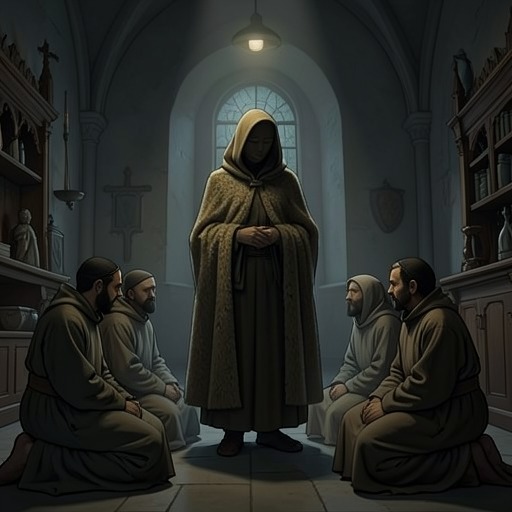
Arthur is laid to rest at the priory, among the Plantagenet kings buried there. After the church has been swept, cleaned, and prepared with incense, Margaret goes with Geoffrey Pole and Constance to begin prayers for Arthur’s soul; the monks join in the chant. The service links family mourning to the priory’s communal religious life. Returning to the great house she has renewed, Margaret sees her family crest above its door and reflects that the wealth and power recovered for her children could not protect Arthur from the sickness. The priory’s burial space thus holds both dynastic memory and the limits of material security.
Household, Vows, and Inheritance
After Arthur’s death, Jane Pole takes vows and becomes a novice at Bisham Priory. Margaret then applies to Thomas Wolsey, recently recovered from illness, for wardship of her grandson. The request is practical as well as familial: Margaret fears that another claimant may take control of the boy’s inheritance, and she wants to manage his estates until he reaches adulthood. She offers Wolsey a substantial fee in addition to the annual payment she already makes for his goodwill. Her concern is that the family fortune should remain available to Arthur’s son, including the benefit of the marriage contract Margaret had arranged.
Jane’s entry into the priory later becomes a point of vulnerability. During the Crown’s investigation, Margaret recognizes that the visitors know Jane wishes to leave her vows and regain control of her fortune, which had been taken from her when the family encouraged her to enter religious life. The inquiry therefore threatens more than the priory’s institutional independence: it may also reopen disputes over a widow’s choices and property. Bisham is represented as a place of religious commitment, but the events show that vows, dower, and inheritance remain entangled with family strategy.
The priory is also connected to the estate’s ordinary material life. At harvest, Margaret stands by the granary as carts bring in corn and the stores promise both food for the winter and income for her estate. Her chaplain and confessor, John Helyar, approaches her there with a private concern about the king’s oath. The scene places the pressure of national religious change beside the practical work of keeping the household and estate in order: the grain stores offer security, while the oath unsettles the household’s religious allegiance.
The Oath and a Hidden Channel of Dissent
When John Helyar says that he cannot take the oath, Margaret tells him that Geoffrey Pole, Montague, and she herself have already done so, and that it is now his turn. She then gives him a white rose as a badge and directs him to Hugh Holland, an old steward and Geoffrey’s friend, who can help him cross the narrow seas. Helyar is to reach Reginald Pole, report the family’s circumstances, and serve him and Princess Mary Tudor. Margaret’s instructions connect the household at Bisham with a wider effort to communicate across the water and with the hope that Reginald will indicate when England is ready to rise.
Helyar leaves the next day. When Prior Richard summons the household after Sunday church to administer the king’s oath in the priory chapel, Margaret reports him missing and suggests that he may have gone to family in Bristol. She conceals the route and purpose of his departure, even as his absence creates the inconvenience of finding a new chaplain and confessor. In her account, the journey has added another link in a chain running from the queen at Kimbolton Castle to Rome, where the Pope is expected to order her rescue. Bisham is thus not only the place where the oath is publicly administered; it is also the point from which a concealed message leaves the household.
Royal Visitation and the Limits of Local Authority
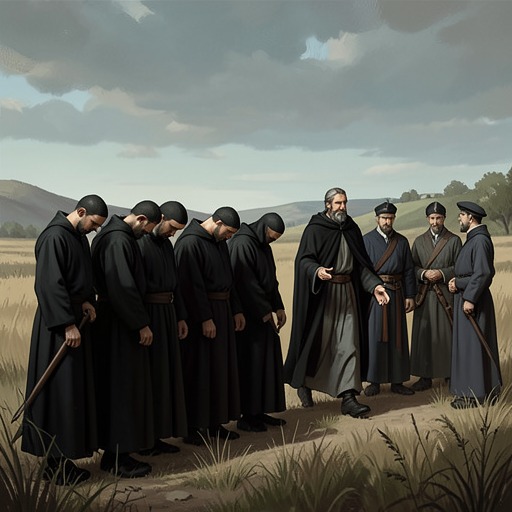
In April 1536, Prior Richard announces that the priory is to be inspected by men acting for Thomas Cromwell. Margaret initially treats the word visitation as an intrusion into the family’s domain. Geoffrey Pole insists that there is no corruption or wrongdoing, while Margaret objects that Cromwell’s men cannot simply enter her priory and question people as they please. Her resistance is rooted in a sense of possession and responsibility: she sees the house as her family’s foundation, situated on her land, not as an institution open to unrestricted royal direction.
Richard Layton makes clear that the inspection will proceed under the king’s authority. He asks to use the prior’s room and directs that canons and nuns be interviewed one at a time, with the oldest first. He intends to question Prior Richard before anyone else and will not allow the prior to sit in on the other interviews. Margaret objects, especially when she realizes that the investigators know about Jane Pole’s wish to leave the priory and reclaim her fortune. Layton also asks to speak to the household’s chaplain; Margaret replies that she has none and that she and her household confess to Prior Richard.
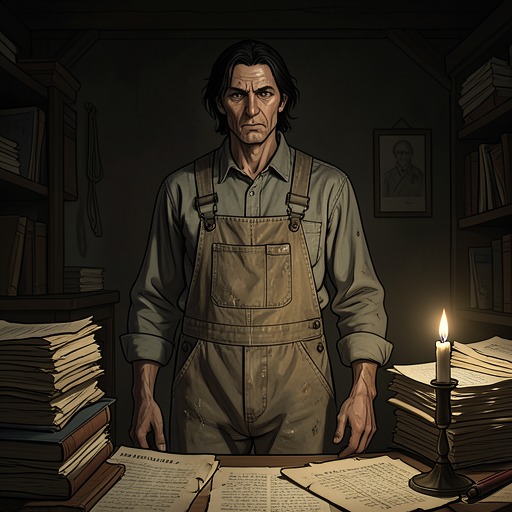
The exchange turns the earlier oath into the Crown’s instrument of entry. Layton reminds Margaret that she signed it, as did Geoffrey, and treats that signature as acceptance of the king as supreme head of the Church and of his right to order the visitation. Margaret’s objection collapses under the terms of the allegiance she has acknowledged. Thomas Legh draws papers toward him and records the proceeding under the heading for the Visitation of Bisham Priory, April 1536. The document gives the investigation an official form, while the interviews and questions bring royal administration into the priory’s rooms and relationships.
Bisham Priory’s significance lies in this movement between refuge and exposure. It receives Arthur for burial, accommodates Jane’s religious life, and anchors Margaret’s efforts to preserve her family’s property and connections. Yet its chapel also becomes the place where the oath is imposed, and its rooms the setting for an inspection that tests the community’s members and their vows. The house remains a center of family memory and religious practice, but the visitation makes clear that Margaret’s claim to its independence cannot withstand the king’s asserted authority over the Church.